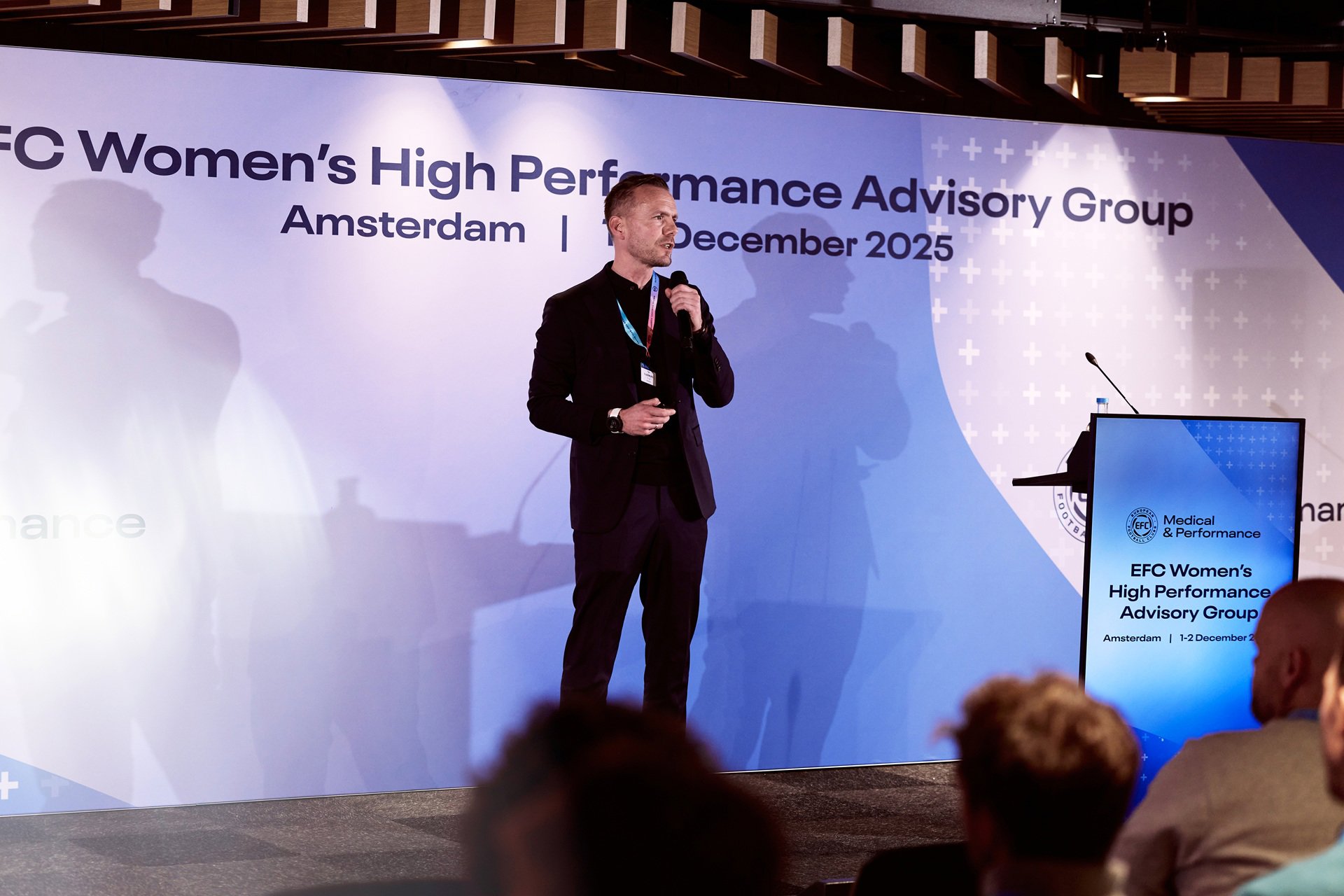
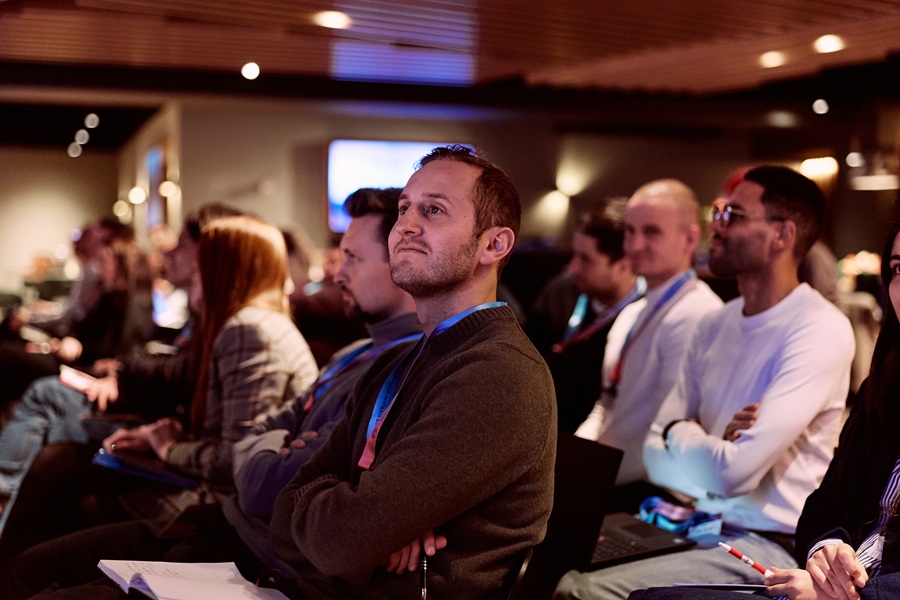
Around fifty clubs were present at the Johan Cruijff ArenA, including Bayern Munich, a participant from the very first edition. "The first time was in Munich; Amsterdam is now the eighth location where we have come together," says Hamid Masoum Beygi on behalf of the German club. "It is interesting to see how we are growing: the events develop in different areas each time, and with every edition, new clubs and people join. This is how we increasingly become one big medical sporting family."
Ajax have been involved for nearly five years now. "Back then, the group of people was still very small," says Tim Glazenburg, Coordinator Medical/Physical/Science of the Ajax Women and the main driving force behind bringing EFC’s Women’s High Performance Advisory Group to Amsterdam. "There were ten clubs, and we held small-scale discussions with the aim of raising women’s football within our areas of expertise. In terms of medical staff, physios and doctors, physical trainers, and data specialists – the ‘science side’, as it were."

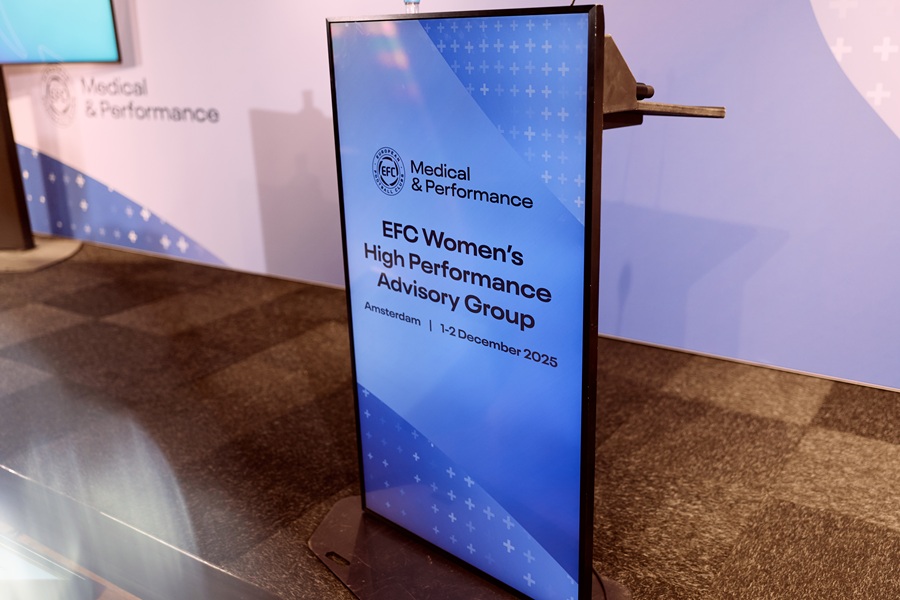
Glazenburg immediately experienced how valuable lessons could be learned. "At that time, we qualified for the group stage of the Women’s Champions League for the first time in our history. That brought quite a few new challenges. We then had a squad with an average age of 22, none of whom were used to playing two matches a week. The big question was: how do we keep the squad fit while playing at such a high level? Arsenal had also just qualified for the first time around then, but suffered a lot of injuries during that period, many of them ACL injuries. We did not want to fall into the same trap and started gathering information at the event, including from Arsenal."
Successful plan
The knowledge gained proved extremely valuable. "In the end, we wrote a complete plan, linked it to the technical staff, and its implementation was very successful. A few editions later, in Milan, two colleagues and I gave a presentation in which we shared our findings. We thought: we have gathered information and now we are happy to give it back to others, driven by the idea of moving the sport forward. That is something truly wonderful, isn’t it?"
That common thread of sharing collective knowledge and working together runs throughout the conference and beyond. Glazenburg: "Something happened at Bayern recently, and I contacted my colleague to ask if I could help in any way. That is not about showing off, but purely about helping each other move forward."
After the earlier presentation in Milan, Glazenburg suggested Ajax as the next host, and so it happened. "We are incredibly proud of that," he says. "Normally, as staff, we do not stand on that stage. It is all about the players, and we mainly operate in the background. That suits us, but for the development of women’s football, it is important to stand there now and help move the sport forward."
The medical department of the Ajax Women has grown substantially in recent years, both in quality and in numbers. "Very big steps have been made," says Daphne Koster, Head of Ajax Women. "When I myself was still playing in 2012, there was one physio. She gave everything, and you could practically wake her up in the middle of the night. But she was completely on her own, which cannot be compared to the situation now."


Guided tour
Koster herself was involved in one of the three presentations Ajax delivered on the first day of the conference. At the end of the afternoon, a walk followed from the Johan Cruijff ArenA to the De Toekomst training complex, where Koster and Melle Sitters (Head of Project The New Future) provided a guided tour of the new elite sports building. The men’s and women’s teams will soon move into the facility together, making Ajax almost unique in global top-level football.
"It fits with the ambition of Ajax Women to structurally be among the best clubs in Europe. Put simply: for that, you have to play in the Champions League or European competitions,” says Koster. “With top facilities that make elite sport at the highest level possible, everything comes together. Then we have both the environment and the resources to further develop talent."
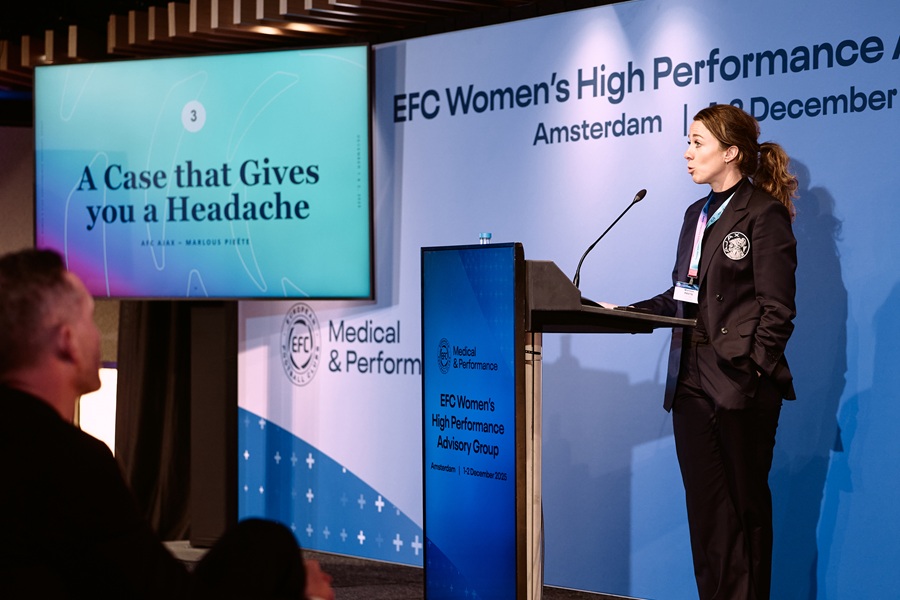
Talent development, Ajax’s trademark with both the men and the women, was also the subject of a presentation given by Bas Tebbens and Eva Hovenkamp. Former player and now physio of the Ajax Women, Marlous Pieëte, also appeared on stage.
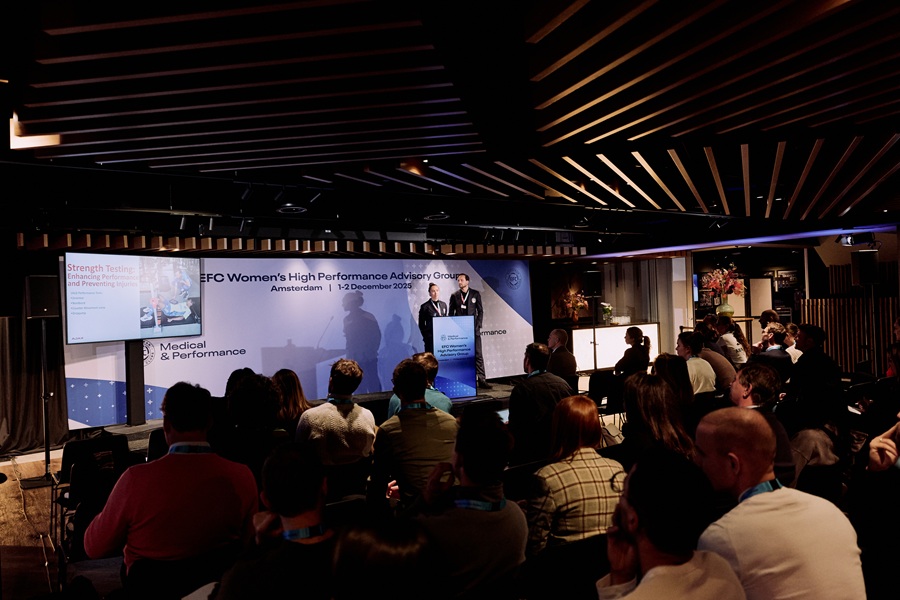
‘Special things’
One of the central topics during the two-day event was the treatment of and approach to concussion. "ACL injuries occur frequently in women’s football, but concussions occur much more often than in men’s football as well," says Glazenburg.
"We had a case study on that, which offered a very sensitive insight into something we had encountered ourselves in the past. We follow the UEFA concussion protocol. Each time you are allowed to take one step further, but at a certain point, you reach a stage where you cannot progress. What do you do then? Because it did not work initially, we developed a method that does work. We do some special things with that."
Masoum Beygi expressed his satisfaction that the subject featured high on the agenda. "It is a big topic. If you have a concussion, everything can be traced back to the brain. The presentation gave us new input and new information that will help all of us."
'Learn'
That outcome was exactly what Glazenburg had been aiming for. "With the event, we do not want to stay at the surface, but really go into depth. To take a good look at men’s football and what we can learn from it, but above all, to always keep looking at what women’s football needs. And together with specialists, try to further develop the sport."
Glazenburg knows there is still enormous room for growth. "The main issue remains that far more research is needed in women’s football,” he believes. “Men’s football has existed for more than a hundred years. The Women’s Eredivisie has only existed since 2007, and Ajax have only been involved since 2012. That is just thirteen years – let us not forget that."
"Recently, I attended a conference about leadership and performance in football. There were a hundred leaders working in football. Ninety per cent of them were men, which I already find remarkable. On the stage were three women who were allowed to speak about women’s football. What you always see then is a question from the audience about what the differences are between men’s and women’s football. That is a difficult question that is actually impossible to answer properly. The result is always very superficial answers. That is why I prefer to look through this lens: what does women’s football need? The differences are there, but let us, above all, look at how we can work together to make women’s football better."
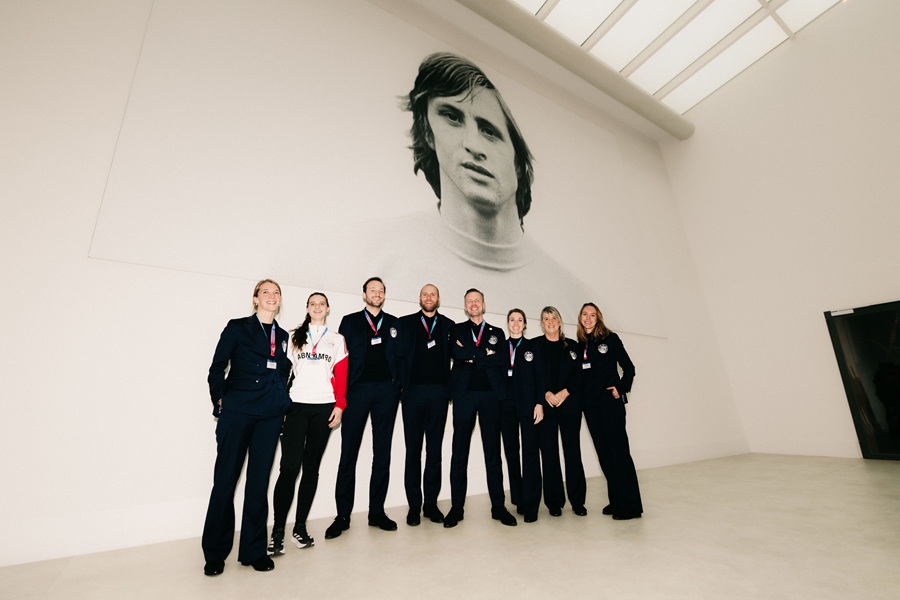
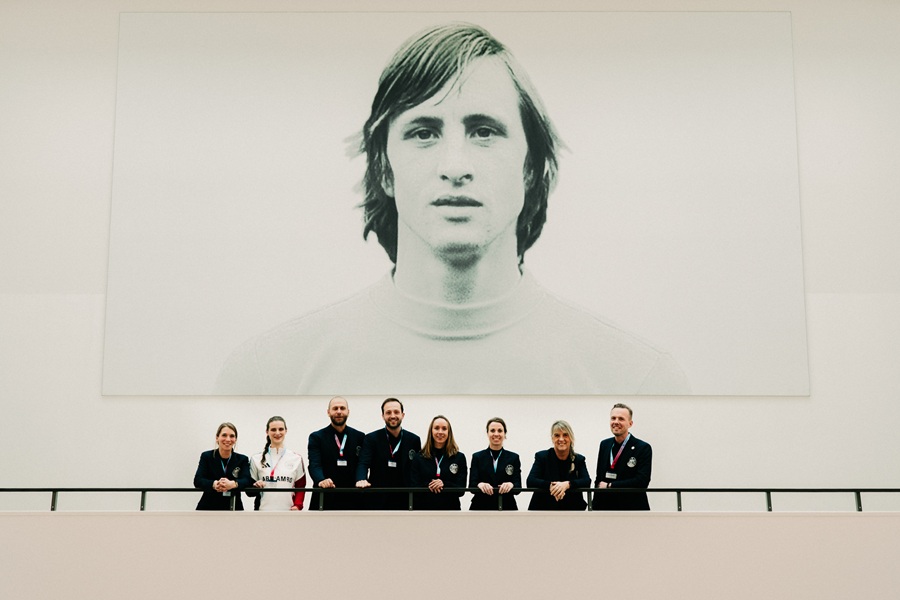
"There are many similarities between male players and female players; the connecting factor is that they all play for Ajax and that we want to get the maximum out of every individual,” Koster said. “At the same time, the elite female athlete requires different emphases in certain areas of guidance, and that is precisely where the opportunities lie. Think of increasing performance capacity, injuries or risks that occur more frequently in women’s football, such as concussions. Fortunately, at Ajax, we have the time, the space and the expertise to properly monitor and guide those nuances."
Impressed
The medical foundation at Ajax Women is solid, according to Maximilian Lankheit of the overarching European Football Clubs. "All I can say is that I am impressed by the work being delivered. Their dedication, attention to detail, and constant willingness to be challenged in their training form a perfect environment for the development of both players and staff."
If it were up to Lankheit, EFC’s Women’s HighPerformance Advisory Group would be further expanded and shaped in the near future. "Our ambition is to be the central nervous system of the medical and performance- community within European club football. That is why we are striving to grow medical and performance events to include even more participants in December next year while maintaining the level of intimacy and quality of networking and content."